Undetected Threat
Training and tools to prevent the undetected threat
| Date | Course | Location | Cost |
|---|---|---|---|
| 30 Nov – 3 Dec 2026 | Agilent GC-MS Software | FLW or TBD | $3,000/student |
| 8–9 Jan 2027 | Basic WMD Indicator Recognition | TBD | $1,500/student |
| 11–14 Jan 2027 | Science Officer Fundamentals | TBD | $3,000/student |
| 16–19 Feb 2027 | WMD Exercise Design | TBD | $3,000/student |
| 22–25 Feb 2027 | Agilent GC-MS Software | FLW or TBD | $3,000/student |
| 15–16 Mar 2027 | 21st Century WMD Analytics [BETA] | TBD | $500/student |
| 12–14 Apr 2027 | Analytics for Field Operators | Klawock, AK | $2,250/student |
| 15–16 Apr 2027 | Basic WMD Indicator Recognition | Klawock, AK | $1,500/student |
| 19–22 Apr 2027 | Science Officer Fundamentals | Klawock, AK | $3,000/student |
| 26–29 Apr 2027 | Agilent GC-MS Software | Klawock, AK | $3,000/student |
| 3–6 May 2027 | WMD Exercise Design | Klawock, AK | $3,000/student |
| 23–26 Aug 2027 | WMD Exercise Design | Klawock, AK | $3,000/student |
| Flexible | Personal Lab Training | Your location | Contact for pricing |
| Available now | Pre-Built Exercise Scenarios | N/A | Contact for pricing |
Course Descriptions
Registration is confirmed upon receipt of payment on a first-come, first-served basis. Class sizes are strictly limited to preserve instructional quality.
Payment is accepted in whichever way works best for you. Contact Jared directly to discuss purchase order processing, unit procurement, or other government payment pathways.
Refunds are issued only when minimum enrollment thresholds are not met, or in the event of a verified real-world mission conflict. If you have questions about a specific situation, contact us before registering.
Training sessions in Klawock have a minimum of four students. All other training sessions have a minimum enrollment of six students. Contact us at least six weeks in advance to coordinate scheduling and venue requirements.
Contact to schedule
Jared Gailey
801 918 1724
[email protected]
MOBILE TRAINING — ANY COURSE, YOUR LOCATION
Full course curriculum delivered at your facility, on your schedule.
Any course in this catalog can be brought to your team's location. This option keeps your personnel together and allows the curriculum to be tailored to your unit's specific equipment, operational history, and training priorities. Ideal for teams that want to maximize training value without travel. A minimum of six students is required for all travel sessions. Inviting neighboring teams to participate at your location can also be a great regional opportunity.
Cost $3,000 per student | Class size 6–12 students
Contact to schedule (limited availability)
Location of your choice
BASIC WMD INDICATOR RECOGNITION
A fast start for new operators — or a concise refresh for experienced ones.
If you are new to the WMD world, this course is your starting point. In two intensive days, you will be familiarized with the most common items of interest in the WMD and HME arena: chemical and biological precursors, processes of high importance, and a working introduction to clandestine production. Scenarios of high operational likelihood drive most of the discussion. Ideal for new operators, survey team chiefs, operations officers, physician assistants, and commanders who need to increase their WMD knowledge without committing to a longer course. Students are expected to bring their current reference materials — cheat sheets, pocket guides, whatever they actually use in the field.
Recommended background: No formal prerequisites. Beneficial for anyone newly assigned to a WMD role or moving from a survey/operations background into analytical responsibilities.
Cost $1,500 per student | Class size 4–15 students
SCHEDULED SESSIONS
8–9 January 2027 Location TBD
15–16 April 2027 Klawock, AK (lodging limited — register early)
SCIENCE OFFICER FUNDAMENTALS
Take years off of lab operator train up
This course is designed for laboratory operators new to the WMD arena who need to rapidly develop a systematic analysis framework before they face a real-world call-out. The curriculum addresses the core problem directly: being responsible for knowing everything bad in the world while simultaneously running and interpreting lab results under operational pressure without any training that addresses this requirement. By the end of this course, students will have a structured approach to differential analysis, a working understanding of critical decision points, and the confidence that comes from having worked through realistic, high-consequence scenarios. A substantial portion of current CST science officers received their initial analytical training through this curriculum.
Recommended background: Intended for science officers or backups within their first few years of CST service. If student does not have a science background the Basic WMD Indicator course is highly recommended prior to this course
Cost $3,000 per student | Class size 4–12 students
SCHEDULED SESSIONS
11–14 January 2027 Location TBD
19–22 April 2027 Klawock, AK (lodging limited — register early)
AGILENT GC-MS SOFTWARE UTILIZATION
Critical capability gaps removed in one week
The GC-MS is the most capable instrument in the lab. It is also the most underutilized, because operators receive extremely limited training in software interpretation. This course focuses specifically on using MassHunter to detect chemical warfare agents and precursors in small amounts and in complex background matrices — exactly the real world scenario you could face tomorrow. By the end of this course, students will have the software proficiency and interpretive framework to be certain they can successfully identify the most common CWA in the most difficult circumstances using the Agilent GC-MS. This is a must-attend for any operator who is not fluent in the Mass Hunter software
Recommended background: Operators with at least basic familiarity with the Agilent GC-MS instrument.
Cost $3,000 per student | Class size 4–12 students
SCHEDULED SESSIONS
30 November – 3 December 2026 Fort Leonard Wood, MO or TBD
22–25 February 2027 Fort Leonard Wood, MO or TBD
26–29 April 2027 Klawock, AK (lodging limited — register early)
WMD EXERCISE DESIGN
Stop paying contractors for exercises that miss the mark. Build them yourself.
Contracting outside vendors for WMD training lanes is expensive — and the results often fall short because contractors lack the operational depth to design scenarios that challenge experienced teams. This course teaches everything required to plan and execute professional WMD training lanes internally: venue selection, agent and scenario selection, objective-setting, inject design, and prop design. Students leave with a reusable exercise design framework they can apply immediately. Learning to design exercises substantially improves performance in both training and real-world events, because it forces operators to think from the adversary’s perspective.
Recommended background: 1-2 years of WMD exercise participation is encouraged, but students from all backgrounds are encouraged.
Cost $3,000 per student | Class size 4–12 students
SCHEDULED SESSIONS
16–19 February 2027 Location TBD
3–6 May 2027 Klawock, AK (lodging limited — register early)
23–26 August 2027 Klawock, AK (lodging limited — register early)
21ST CENTURY WMD ANALYTICS AND DECISION MAKING [BETA]
The threat environment has changed. Survival may depend on rapid adaptation
Doctrine and training have always been decades behind. However, the technology shift in the last year has made much of our defense system obsolete. This course is a ground-level examination of what that shift means for the operators who make real-time decisions in a brand new and even more hazardous environment — the science officer reasoning through a complex problem, the team lead making entry, the on-scene commander choosing a course of action. It is not a technology survey. It is a practical look at the new capabilities now available to decision-makers and action takers and how to integrate them into an operational workflow without replacing judgment and experience that cannot be automated.This course is in active development; registered students will have direct influence on its final form. Content, pace, and emphasis will be shaped by this cohort. This is offered at a reduced rate to reflect that and to put the right people in the room as soon as possible.
Recommended background: Intended for science officers, survey team leaders, on-scene decision-makers and evaluators.
Cost $500 per student* | Class size 4–12 students
SCHEDULED SESSIONS
15–16 March 2027 Location TBD
*beta rate — subject to change in future offerings
ANALYTICS FOR FIELD LEVEL OPERATORS
Experienced downrange operators ready to move to the next level
This course bridges the gap between field execution and analytical interpretation. Experienced operators who have spent years collecting samples and executing downrange tasks are exceptionally valuable, and this course is design to feed their hunger for expanded capabilities. The focus of this training is instrument capabilities and results interpretation, improved precursor and process understanding, and development of intuitive downrange actions. This course provides this context in a compressed, operationally-grounded format. Students leave with a significantly deeper understanding of how their actions in the field connect to the analytical picture, and why the details they collect matter.
Recommended background: A minimum of three years of hands-on WMD operations experience unless taken as a team. In a team environment, this course will be helpful to all. Otherwise, this course is intentionally not designed for beginners — the curriculum assumes familiarity with field operations and pushes into interpretation and analysis.
Cost $2,250 per student | Class size 6–12 students
SCHEDULED SESSIONS
12–14 April 2027 Klawock, AK (lodging limited — register early)
PERSONAL LAB TRAINING
20 years of analytical lab experience at your lab
Group courses teach to the room. This option is built around a single team. Over the course of several days working side by side in the lab, the focus is on identifying knowledge gaps — instrument operation, sample processing, software interpretation, differential reasoning, or any combination — and working one on one to fill them. The curriculum is not fixed, but determined by the specific needs of the operators. This option is for analysts who have been through the standard training cycle and still feel undertrained and out of resources. It is also appropriate for newly assigned science officers who want accelerated one-on-one development before their first real-world call-out, veteran operators looking to challenge themselves, or a mixed analytical team looking to grow together.
Recommended background: Most applicable to CST science officers and analytical section personnel at any experience level.
Cost Contact for pricing* | Class size 1–4 students
SCHEDULED SESSIONS
Flexible but limited availability — contact to schedule location of your choice
*fee is based on duration and scope
READY-TO-RUN EXERCISE SCENARIO PACKAGES
Professional exercise content without tasking your go to people
Designing a quality WMD exercise from scratch requires significant time, subject matter expertise, and operational experience. The team personnel asked to design these events rarely get to participate fully, leaving the team only partially trained despite exceptional members. These scenario packages deliver a complete, ready-to-execute exercise — threat context, objectives, injects, prop construction, and evaluation framework — built to a professional standard by an instructor with decades of design experience.Packages range from a two-hour tabletop suitable for a single section or small team, to a multi-day, multi-player, multi-venue large-scale exercise designed to stress the full team or multiple teams across simultaneously. Every package is built around realistic, operationally credible scenarios and can be adapted to your team's specific equipment, procedures, and training priorities.
Teams that use these packages retain full ownership of the materials for repeat use.
Scale range Any scale assuming enough lead time
Each package includes everything you need to build a scenario that meets your objectives
Pricing Contact for pricing — fee is based on scenario complexity and scale
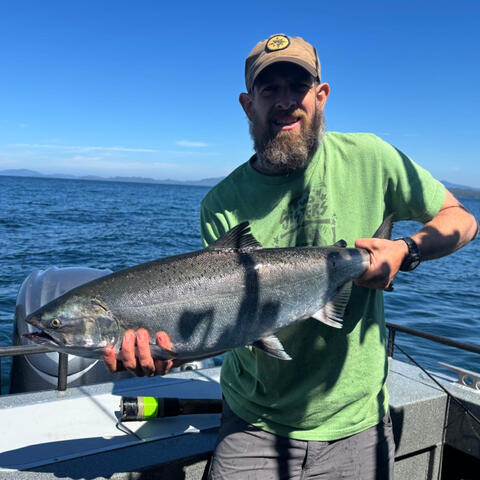
About the instructor
Jared Gailey, PhD, MPH
Jared spent 20 years as science officer with the Utah 85th WMD Civil Support Team. He participated in nearly 100 real-world missions alongside local, state, and federal agencies including FBI, DEA, FEMA, EPA, ATF, and HSI — incidents ranging from routine hazmat calls to events that had no established playbook.A substantial portion of the CST analytical community developed their analytical foundation through his work. He holds a PhD in Microbiology and a Master of Public Health. His MPH trained him to evaluate evidence on merit rather than dogma or consensus, and that discipline runs through everything he teaches.The curriculum in this catalog compresses years of operational experience and pattern recognition into days — not to replace field experience, but to give students the framework to make the most of it.
Contact
Interested in one of our classes?
Jared Gailey | 801 918 1724 | [email protected]